I am all for inclusion especially when it comes to children and allowing them to experience the joys of childhood. Halloween is one of those holidays where children can just be children despite their diagnosis, limits, and differences. Children can pretend to be someone or something else for a day. All of their troubles, anxieties, fears, and inabilities fade away. To allow for inclusion and understanding, I have complied some Halloween tips/tricks to make for a memorable holiday:
1. Non-edible option: Consider buying stickers, bubbles, and other trinkets in addition to candy to give out to those children that might have food allergies, are unable to eat by mouth, or have diet restrictions. By offering non-edibles as an option, everyone gets to feel special and participate in trick or treating.
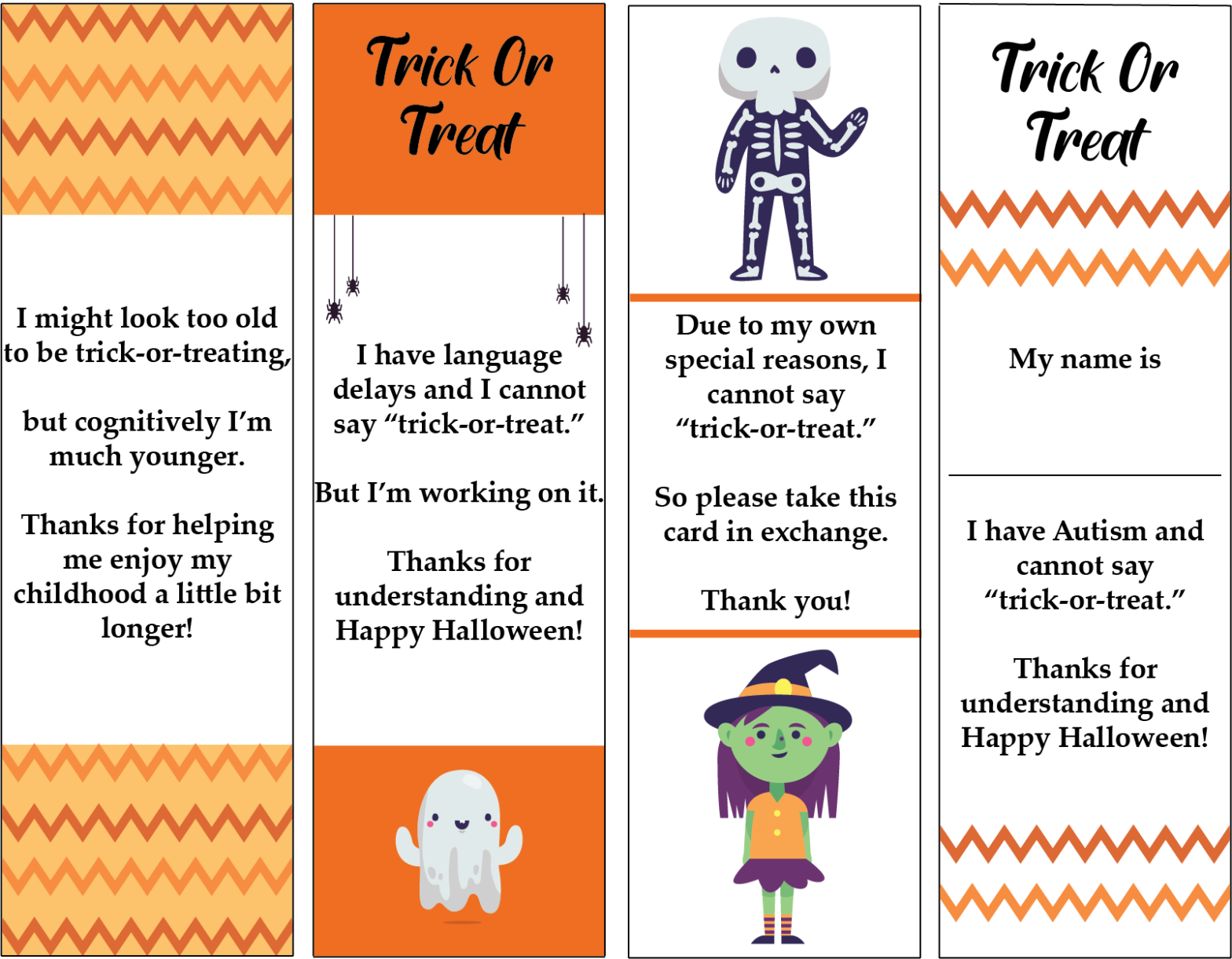
2. Trick or Treat: Don’t expect everyone to say “Trick or Treat” or “thank you” in exchange for a Halloween treat. Some children are non-verbal, have language delays, or other communication issues that prevent them from being able to communicate with you. I created this printable that children can use in exchange for their Halloween treat. The printable allow them to communicate non-verbally with others to show their appreciation.
3. Patience: Having trick or treaters can be fun, exciting, and exhausting. When you have a large crowd and are passing candy out one right after the other, it’s easy to get in a rush and just start tossing candy to get rid of it. Remember patience and if a child wants to pick their own treat out to let them. They might have an allergy, be a picky eater, need to be in control, or want to see all of the options before making a choice. My son would always get to pick a sucker after church and he would take forever trying to find the one that was rootbeer flavored. Also, if they take a little longer to select their choice I have to remember not to rush them because they could have dexterity problems and it’s hard for them to grab candy. They could have visual issues and it takes them longer to scan all of the items to find the right one. They could also have delayed processing skills so when you say “grab 2 pieces” they have to process what you said, figure out how many 2 is, and finally get their brain to tell their muscles what action to do. Most of these things we do so quickly and without thinking, but for others it’s not so easy. Patience and understanding is important.
4. Age is just a number: You might get some trick or treaters who appear too old to engage in the fun. Most children with disabilities have cognitive delays. They may look like and be a teenager, but they are cognitively only 8 years old. They deserve to enjoy childhood just as much as the other 8-year-olds, so I say let them partake in the fun while they can.
These are just a few tips to think about and incorporate into your Halloween festivities to make it inclusive and memorable for EVERYONE! Share with your friends, neighbors, and any parents that would benefit from the printable.
 Chelsea’s Clubhouse