
There are so many children on my case load, especially in pre-k and kindergarten that have never been exposed to scissor use. When I hand them a pair of scissors to use they just look at the tool like it’s foreign and they don’t even know how to hold them. The general consensus for limited exposure to scissor use is safety. Most caregivers express that they do not let their child use scissors at home for fear that they might cut their fingers, cut their hair, poke their eye out, etc. Trust me, I get it!
A couple of months ago my son decided to give himself a haircut with his scissors. We have talked repeatedly about how scissors are used for only cutting paper, but I guess he has had his hair cut enough times that he knows scissors can cut other things like hair.
With that being said, it is really important to allow kids to practice their scissors skills, under direct supervision of course. Most of the assessments I use have some type of scissor skill set starting at the age of 2. Kids at this age should learn how to hold scissors correctly and learn how to open/close the scissor blades. You are probably thinking there is no way a 2-year-old is responsible or mature enough to start learning how to use scissors. If you feel uncomfortable with that idea here are some tips that allow you to introduce scissor skills safely, responsibly, and of course, enjoyably:
1. Scissor free: Children must have strong hand muscles and be able to isolate both sides of their hands to use scissors correctly. Start by getting their hands ready for scissor use by having them tear paper into pieces by using both hands together.
To build up hand muscles, you can do resistive activities like wheelbarrow walks, bear walks, resistive putty exercises, etc.
Also, work on isolating both sides of the hands by completing poking activities (i.e. poke objects into a container using each individual finger), finger puppet/finger songs, picking up small objects with thumb, index, middle finger and with ring, pinky, thumb fingers.
2. Use safety scissors: Safety scissors only cut paper. By using safety scissors, children will learn the concept of how to hold the scissors, learn to open/close the blades, and learn to snip paper without the temptation to cut hair or fingers. Click on the picture below for a link for purchasing these scissors.
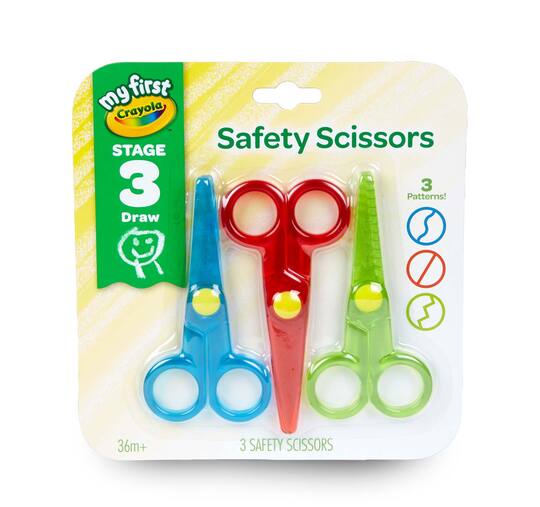
3. Proper positioning is key: Half of the battle of learning scissor skills is teaching proper positioning. When children are first learning how to hold scissors, I like to provide a visual so they can see if they are holding the scissors correctly. I like to use a sticker or I will draw a smiley face with a marker on their thumb so that they know to hold the scissors with the thumb up (where they can see the visual as a reminder).
4. Playdough: Make practicing scissor skills fun and engaging by having the child cut playdough into small pieces or use a stamp/cookie cutter and try to cut the design out.

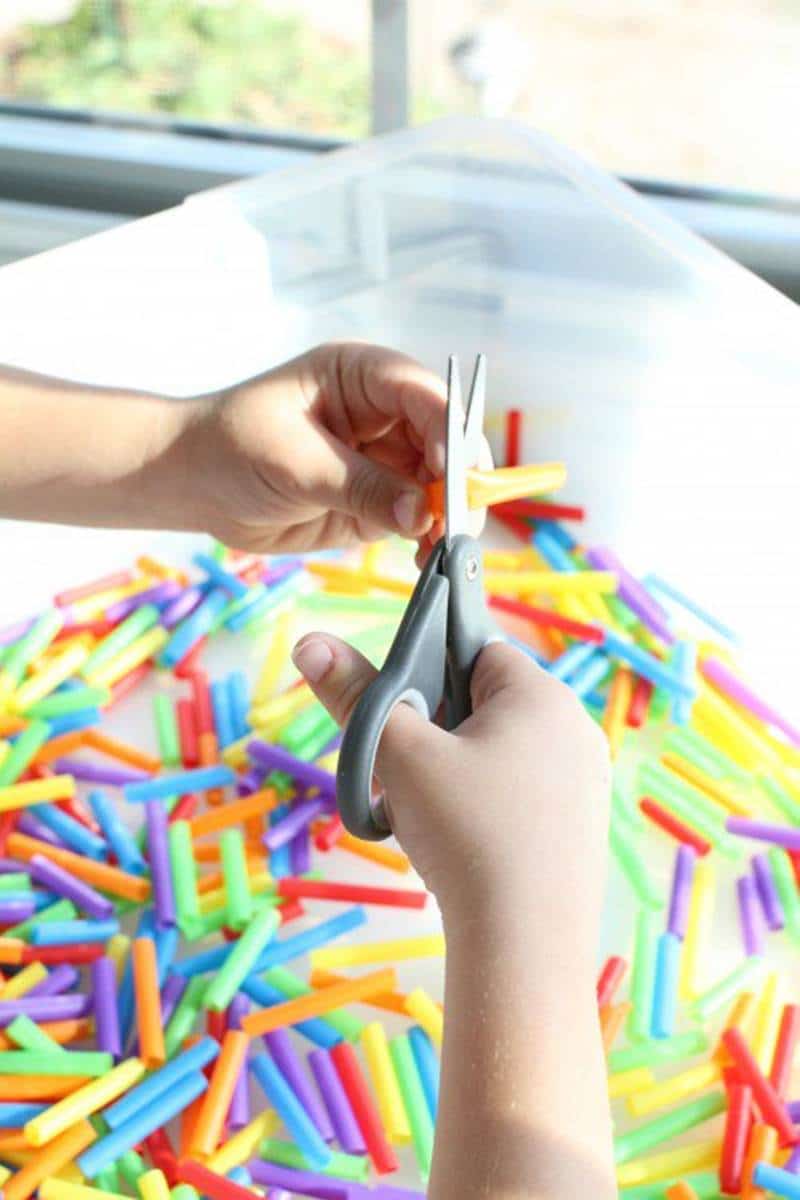
5. Straw Soup: Have the child cut straws into small pieces into a bowl to make “soup” while practicing scissor skills. You can also use the cut straw pieces to string onto pipe cleaner or yarn to make jewelry.
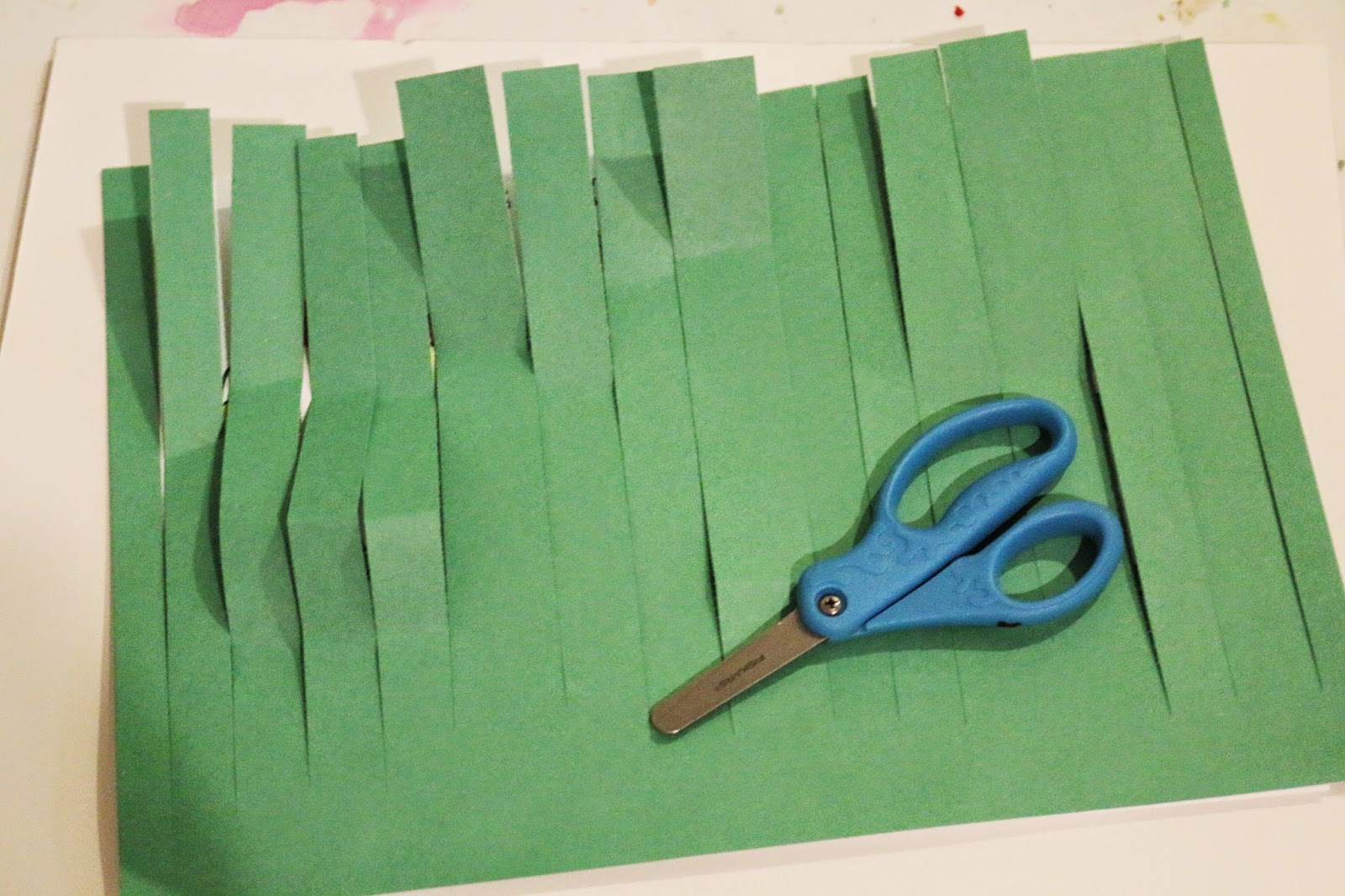
6. Grass Cutting: Once the child is ready to progress from snipping objects you can practice cutting across paper or on straight lines by cutting “grass”. Draw lines on paper and have the child cut on the given lines to make grass.
I hope these tips and ideas give you the confidence and trust in your toddler’s ability to use scissors safely and responsibly with your assistance. Your child’s teacher will thank you for exposing your child to scissor use before they start school. Your child will also enjoy learning how to use scissors at their own pace by completing some fun activities.
 Chelsea’s Clubhouse